What kind of water problem is this?
Match the symptom you can see to the service worth reading next. Two yards can look similar and still need different work.
| What you notice | Where to start |
|---|---|
| Visible puddle in one low spot | Catch basins and surface drains |
| Ground stays soft after the puddle disappears | French drain installation |
| Water runs toward the house | Grading and swales |
| Wet area is directly beneath a downspout | Downspout drainage |
| Existing drain stopped working | French drain repair |
| More than one of these | This page. Which drainage solution is the same sort, in longer form. Neither one diagnoses a lot from a description. |
Not Sure Which Drainage System You Need?
That is normal. The first decision is not which product to buy. It is whether the water is on the surface, in the soil, coming from the roof, or being sent there by the grade.
That assessment is part of yard drainage in Portland, Maine and nearby Cumberland County, Maine. The visit looks at those four questions, then at whether collected water has an appropriate place to go. How yard drainage works is the short version of that path.
Yard drainage problems we see
If several of these sound familiar, the yard is telling you water is not finishing its trip off the property.
- Standing water after rain
- A swampy lawn that stays wet for days
- Low spots that collect every storm
- Water trapped between houses
- Runoff collecting near the house
- Downspouts dumping water where it pools
- A yard that is saturated even between storms
How yard drainage actually gets solved
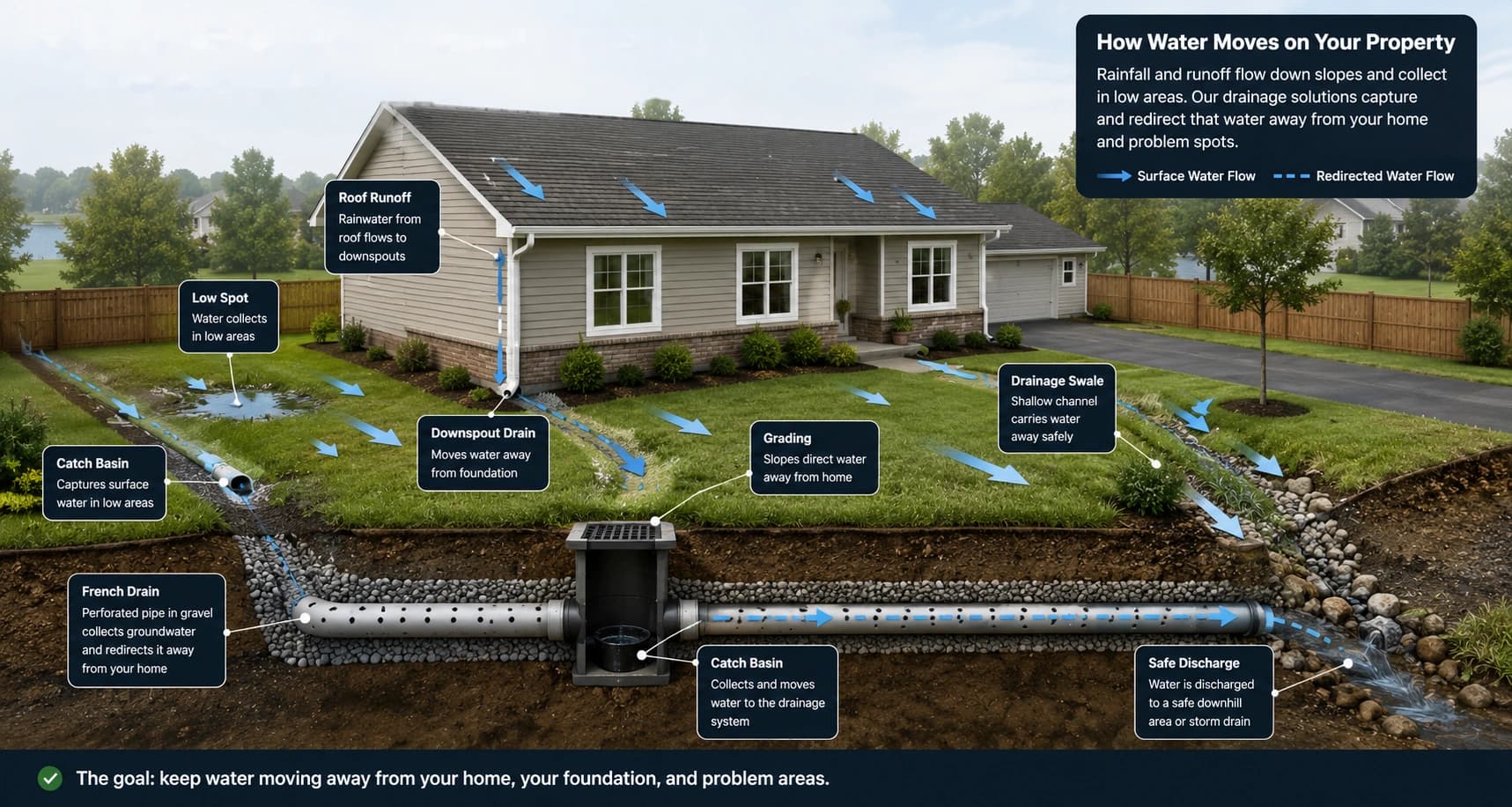
Water has a source, a path, and an ending. A useful drainage plan traces all three. Roof water starts on the shingles. Surface water runs across grass and pavement. Groundwater sits in the soil.
French drains collect water that is already in the ground. Catch basins and surface drains pick up water that is still on top. Grading and swales change the shape of the yard so water runs the right direction. Downspout drainage keeps roof runoff from being dumped in the worst possible place.
There is no universal system. Two neighbors can have similar-looking puddles for different reasons. The work is matching the method to the water, then giving that water a safe place to go.
Which type of drainage fits which problem
If the soil stays wet and spongy, a below-ground French drain is often in the conversation. If you can see a puddle form in a bowl in the lawn or on hardscape, a catch basin or surface drain is usually the more direct collector.
If water is crossing the yard toward the house or a neighbor, the ground may need to be reshaped with grading or a shallow swale before any pipe goes in. If the wet area sits under a downspout, start with the roof outlet. If a drain already in the yard used to move this water and stopped, start with repair rather than a new product name.
Many properties use more than one method. A downspout line can feed a catch basin. A swale can carry surface water to a drain. A French drain can pick up what still soaks into the soil. The combination should follow the water, not a package deal.
What a contractor should evaluate
A yard drainage visit is less about selling a particular product and more about watching how the property handles rain.
- Where water starts — roof, neighboring grade, or the yard itself
- Where it collects and whether it is on the surface or in the soil
- Slope toward or away from the house
- Current downspout discharge
- Existing drains, swales, or buried pipe
- A workable outlet that does not create a new problem
- Access, landscaping, and anything that limits trench or grade work
Drainage solutions we offer
Use these pages to compare the main exterior options. Yard drainage is the hub; each solution handles a different part of the water problem.